
Views: 0 Author: Site Editor Publish Time: 2026-10-12 Origin: Site


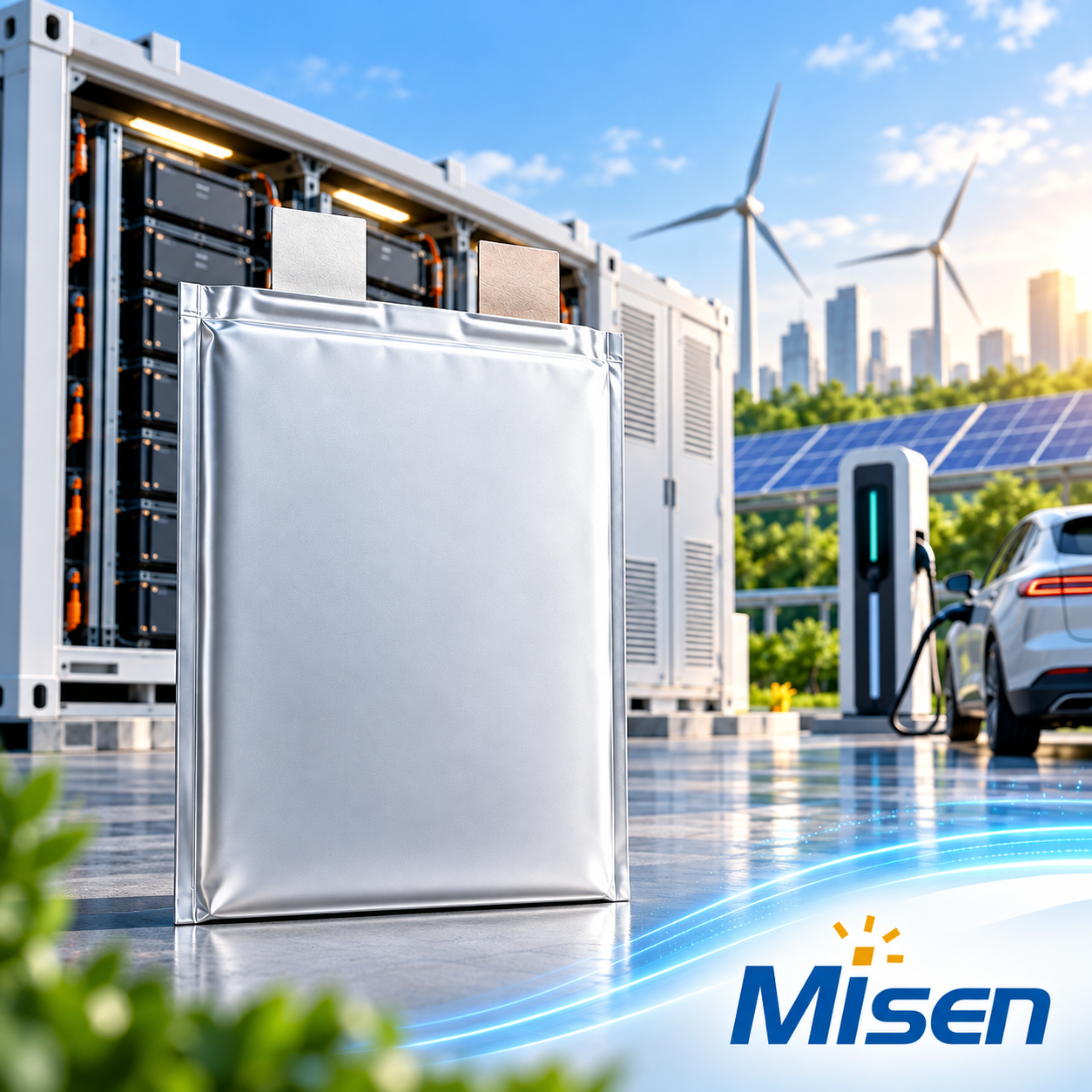
Battery energy storage and EV fast-charging facility (illustrative image)
All application images in this article are generic illustrations, not photographs of any named customer installation.
Battery energy storage systems (BESS) are increasingly used to support high-power EV charging, commercial energy management, and industrial backup power. For engineers and procurement teams maintaining an established battery platform, finding a compatible Kokam K103 103Ah pouch cell can be just as important as selecting a cell for a new project.
This guide explores where 103Ah NMC pouch cells fit in stationary storage systems, the practical checks involved in sourcing exact model variants such as KCL255103EN1, and how to evaluate the related K114 114Ah NMC pouch cell for a new battery design.
| 103 Ah | Approx. 379 Wh | 114 Ah |
| K103 listed capacity | K103 listed energy* | K114 listed capacity |
*Values in the highlights are from the linked Misen K103 product listing. Confirm the exact manufacturer part number and revision before using them for KCL255103EN1 procurement or pack design.
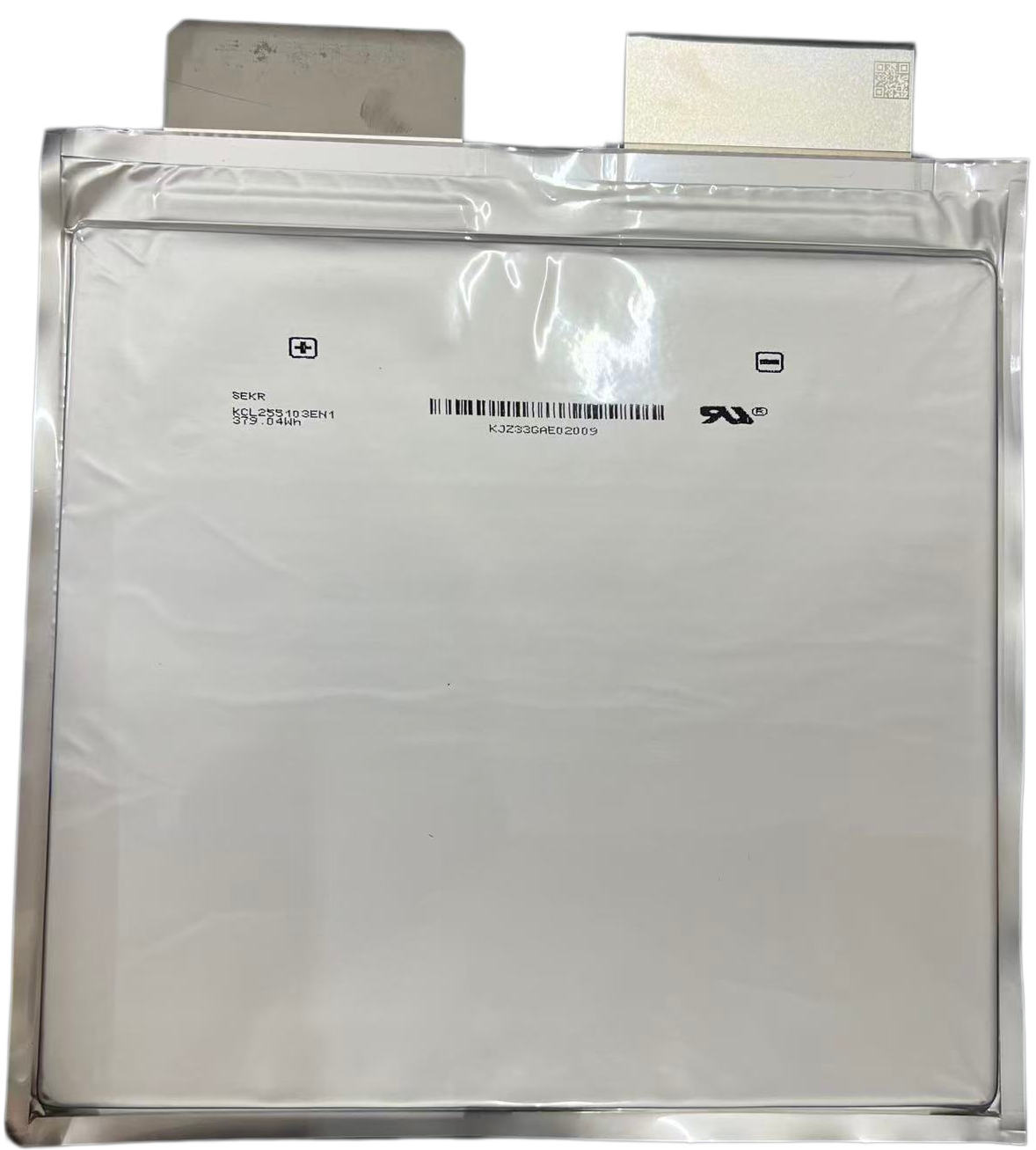
“K103” is used in the market to describe a large-format, approximately 103Ah lithium-ion pouch-cell class associated with Kokam-type battery platforms. This format is relevant to battery modules where high energy per cell, controllable temperature, and efficient packaging are important. The exact electrical and mechanical characteristics, however, depend on the complete model code and manufacturing revision.
The Misen K103 103Ah NMC pouch-cell product page currently lists 103Ah capacity, approximately 379Wh nominal energy, a nominal voltage rounded to 3.7V, a 268 × 265 × 13.3mm pouch outline, and 206A continuous discharge under its published test basis. These are useful initial screening figures, not proof that every K103-labeled cell has identical specifications.
For example, buyers may encounter identifiers such as KCL255103EN1 or other KCL255103-series revisions. Even when cell capacity is similar, the tab geometry, dimensions, nominal voltage, voltage limits, thermal characteristics, and test conditions must be checked against the exact OEM documentation.
Procurement tip: When requesting a quote, provide a photograph of the cell label and the full printed model number—not only “K103 103Ah.” Ask the supplier to confirm that the quotation, photos, and datasheet refer to the same model and production batch.
Large-format NMC pouch cells can be considered for a range of stationary battery applications, provided the system design and the cell’s validated operating limits are compatible. Three common use cases are particularly relevant to buyers of high-capacity cells.
A conventional high-power charger may require substantial electrical infrastructure. A battery-buffered charging station approaches the problem differently: a stationary battery charges gradually when power is available, then delivers higher output for short charging sessions. This may help a site manage peak grid demand, although the achievable charging rate still depends on available stored energy, power electronics, SOC, and thermal limits.
Figure 1. Simplified concept: battery-buffered EV charging
| Grid / Renewable Input Steady energy supply |
| BESS + PCS + EMS Energy storage and power management |
| DC Fast Charger High-power charging output |
Concept illustration only. Actual power flow and system performance depend on design and operating conditions.
As an industry reference, a commercially published storage-buffered charging architecture describes up to 350kW charger output with as little as 50kW grid input under its specified configuration (public technical example). This illustrates the storage-buffering concept; it does not establish that K103 cells are used in that equipment.
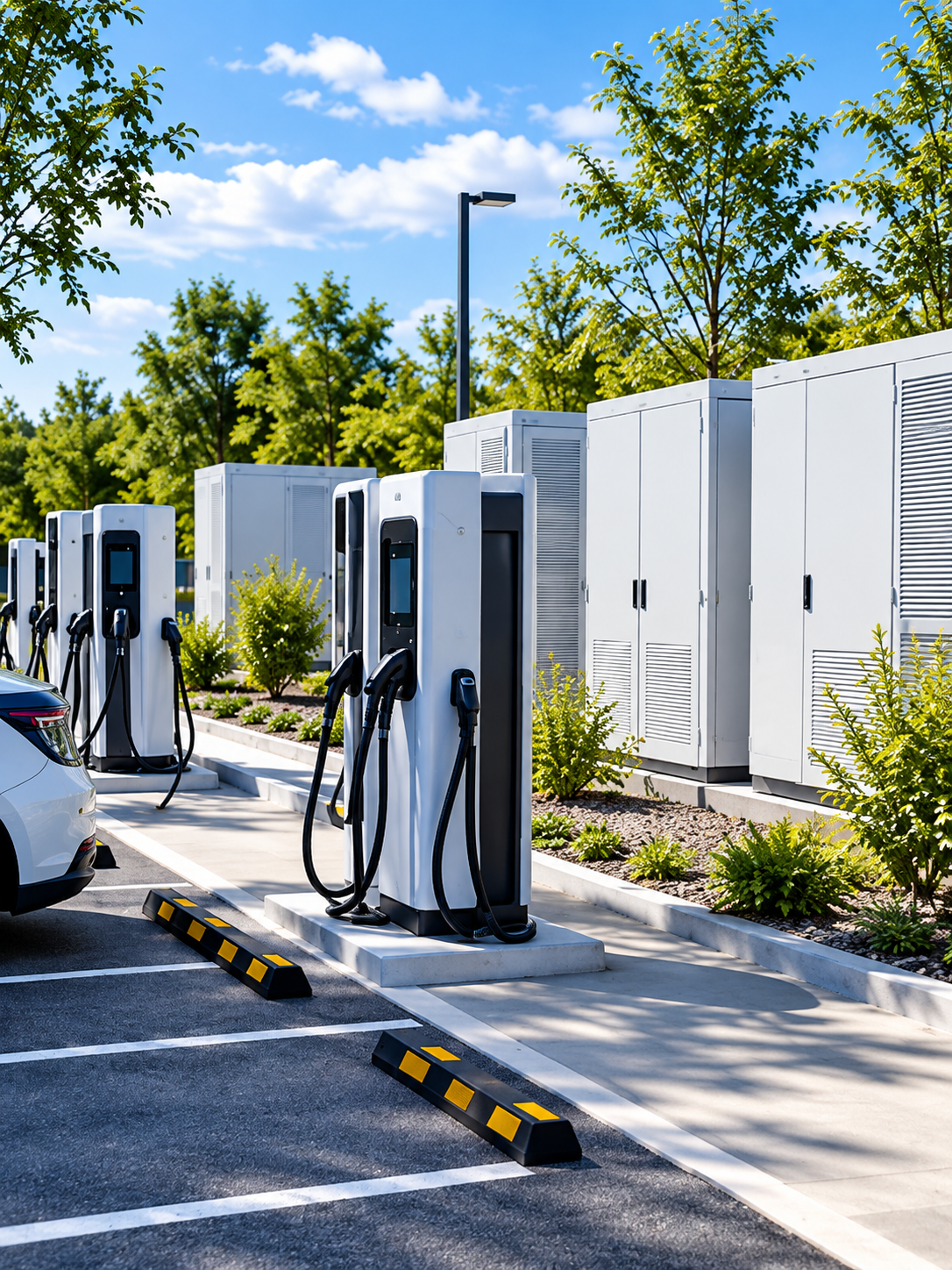
Outdoor storage-assisted EV charging station (illustrative image)

Industrial BESS battery racks (illustrative image)
Commercial energy storage can help facilities shift energy use to more favorable periods, reduce grid demand peaks, integrate on-site solar generation, and maintain selected loads during outages. For these projects, cell-level energy is only one input. Integrators also evaluate usable depth of discharge, calendar aging, cycle profile, enclosure protection, fire-safety strategy, and service life.
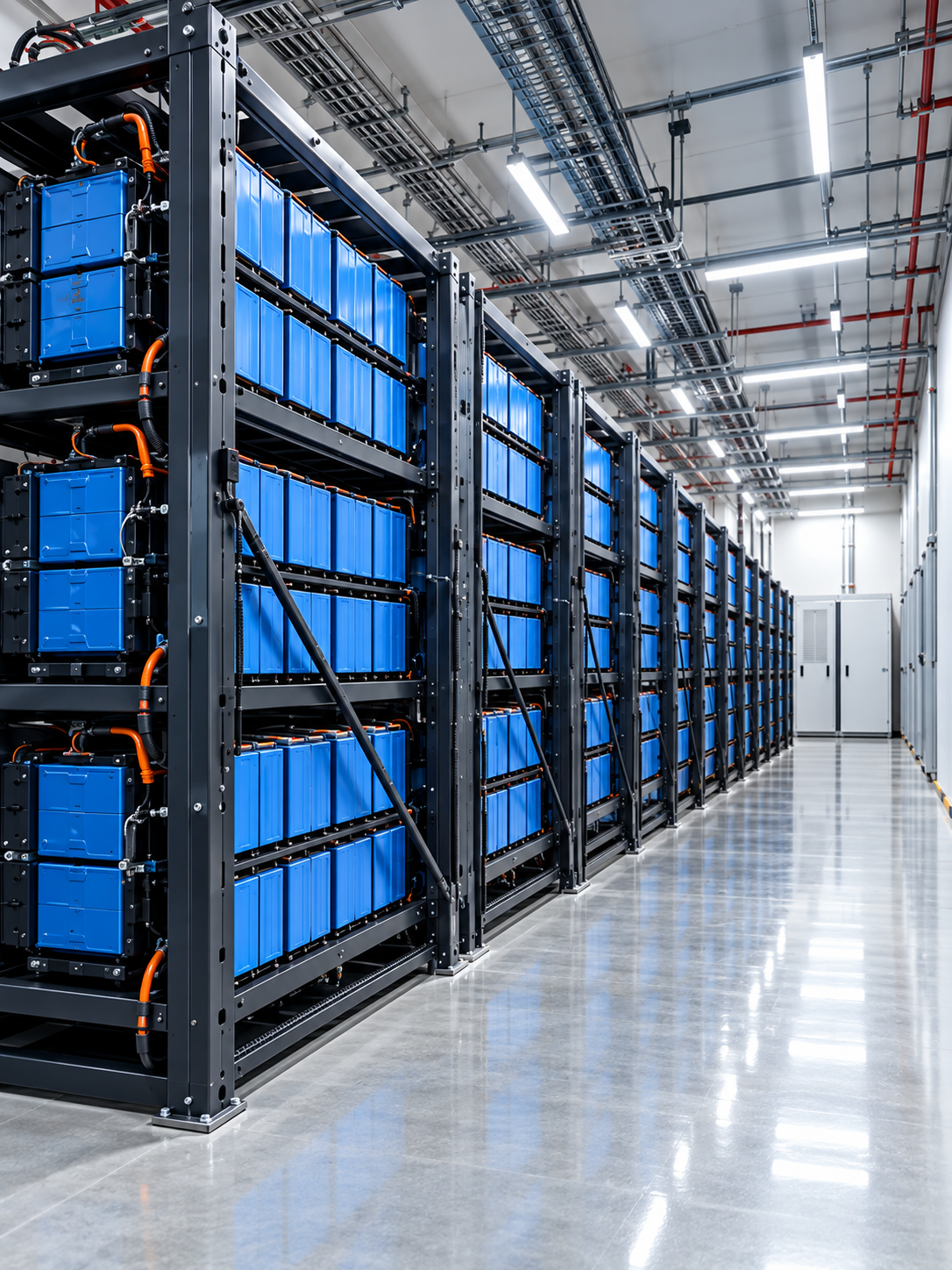
Vehicle depots and industrial sites may require battery systems capable of absorbing off-peak energy and delivering power during predictable operating windows. Large pouch cells can support compact module layouts, but engineering teams must design correct compression, cooling, cell monitoring, insulation and electrical protection.
Battery design is a system-level process. Even an attractive cell specification should not be used by itself to promise fast-charging output, cycle life, or field reliability. At minimum, evaluate the following:
Energy & voltage
Confirm nominal/rated voltage, allowable operating range, and usable energy at the intended SOC window.
Power capability
Review continuous and pulse current ratings at the relevant temperature, SOC and cooling condition.
Thermal design
Check cooling approach, sensor placement, temperature gradients and pack derating.
Mechanical design
Verify thickness, tab layout, compression requirements, enclosure clearance and module fixtures.
BMS & safety
Validate protection settings, balancing strategy, fusing, isolation, thermal propagation and certifications.
Service requirements
Request traceability, batch consistency, inspection records, storage history and acceptance criteria.
For stationary storage, a high discharge rating does not automatically mean a cell is the most economical choice. The better selection depends on the power-to-energy ratio, cycle duty, thermal environment, installed cost, expected maintenance and system life.
An existing energy storage system may have a mature mechanical layout, BMS calibration, inverter integration and safety validation based on a particular cell. In that case, the procurement task is often finding a truly compatible part rather than simply increasing capacity.
Before considering replacement cells, the operator should document the OEM model suffix, cell chemistry, module series/parallel configuration, tab locations, dimensions, maximum/minimum voltage limits, DC resistance testing method, and the BMS operating strategy. A replacement program must also address the age and state of health of the remaining cells.
Mixing new and aged cells or different model revisions in one series string can create imbalance and uneven stress. Adding nominal capacity to one position does not automatically improve a battery rack; it may instead complicate SOC estimation and protection behavior. Some systems require replacement at the module or string level after engineering assessment.
Important compatibility note: KCL255103EN1 should be quoted and evaluated as an exact model request until documentation demonstrates otherwise. Similar nominal capacity, external appearance, or the name “K103” is not sufficient to approve a drop-in replacement. Qualified personnel should evaluate any BESS retrofit.
For a new energy storage or industrial battery module, K114 114Ah is another large-format NMC pouch-cell option. It offers higher nominal capacity than the 103Ah class, but its outline and validated charge/discharge limits must be considered independently.
| Parameter | K103 (Misen listing) | K114 (Misen listing) |
|---|---|---|
| Nominal capacity | 103 Ah | 114 Ah |
| Nominal voltage | 3.7 V (rounded) | 3.68 V |
| Listed nominal energy | Approx. 379 Wh | Approx. 419.5 Wh |
| Cell format / chemistry | NMC pouch | NMC pouch |
| Dimensions | 268 × 265 × 13.3 mm | 357 × 177 × 15.6 mm |
| Listed weight | Approx. 1.81 kg | Approx. 1.90 kg |
| Listed continuous discharge | 206 A (2C) | 228 A (2C) |
| Listed short pulse discharge | 309 A (3C), ≤10 s under stated SOC conditions | 342 A (3C), 10 s under stated SOC/temperature/BOL conditions |
| Best evaluation starting point | Existing 103Ah platform and verified exact-model sourcing | New module design requiring higher per-cell capacity |
Figures reproduce the linked Misen product listings for preliminary comparison only. Conditions and supporting manufacturer documents differ; values must be confirmed before design release. This table does not establish technical interchangeability or guarantee the exact KCL255103EN1 specification.
Figure 2. Listed nominal energy per cell
| Cell | Listed nominal energy | Relative energy |
|---|---|---|
| K103 103Ah | Approx. 379 Wh | 90.3% |
| K114 114Ah | Approx. 419.5 Wh | 100% |
K114 has approximately 10.7% more listed nominal energy per cell. This does not predict usable pack energy or imply interchangeability.
If the goal is to service an installed 103Ah BESS, selecting the correct original model and revision remains the priority. If the project is being designed from the ground up, both K103 and K114 can be screened against pack dimensions, current profile, supply traceability, and documentation.
Engineers and purchasing teams can shorten supplier qualification by sending a focused technical request. Include the full printed cell code (for example, KCL255103EN1), target quantity, application, expected annual demand, required delivery country, project schedule, and whether the cells must match an existing module.
For refurbished or operating ESS equipment, share clear label and tab photos, the module drawing if available, and the current pack configuration. For a new ESS design, provide the series/parallel architecture, target usable energy, peak/continuous power, cooling method and safety requirements. This allows a supplier to screen a cell option on more than the nominal Ah rating.
Ask suppliers to identify cell condition (new vs. other stock categories), manufacturing dates, lot numbers, inspection results and transport documentation. Required compliance documentation should be checked for the exact cell or assembled battery as applicable; a certification icon on a general product image is not a substitute for the actual test report or certificate.
Misen Power provides product information for the K103 103Ah NMC pouch cell and the K114 114Ah pouch cell. Buyers comparing additional formats can browse the NCM pouch-cell category or send their model number and project requirements for review. Availability, grade, manufacturer identity and documentation should be confirmed as part of each quotation.
A 103Ah NMC pouch-cell class can be considered for BESS applications, but suitability depends on the exact model, operating duty, pack architecture, thermal system, BMS and regulatory requirements. The name K103 alone is not enough to establish compatibility.
Do not assume so. Published information under the broader K103 name can differ from information provided for KCL255103EN1. Verify the printed model, OEM specification and physical samples before placing a compatibility-sensitive order.
Not without engineering review. The listed dimensions differ significantly, and electrical limits, tabs, compression requirements and BMS settings may differ. K114 is better treated as a separate option for new pack designs unless a qualified replacement program confirms compatibility.
Please include the full cell part number, quantity, label photos, application (new pack or maintenance), delivery destination, planned order schedule, and a list of required technical and shipment documents.
Send Misen Power your exact cell model, required quantity, application, and destination. Our team can review available cell options, product documentation, and next steps for technical confirmation.
For established battery platforms, please attach the original cell label and part number.
Misen K103 product specifications · Misen K114 product specifications · Public industry example of battery-buffered fast charging.
The references describe product listings and an application concept; no third-party installation in this article is presented as a confirmed Misen customer or a proven K103 cell deployment.


